Headlamps: The Hands-Free Advantage
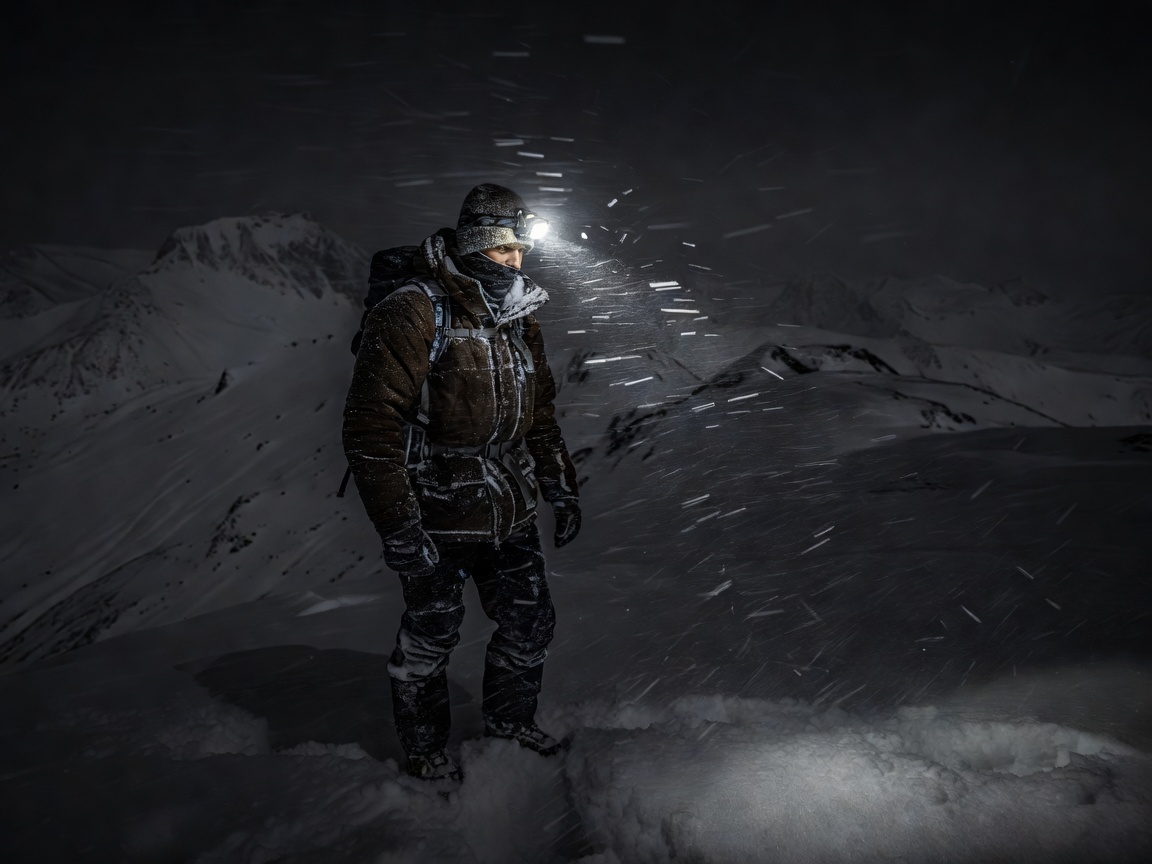
Whether you are setting up a tent in the dark, performing intricate mechanical repairs under a vehicle, or trail running at midnight, a handheld light ties up 50% of your manual capability. Headlamps resolve this by placing the light source directly in your line of sight. However, headlamp design involves unique challenges regarding weight distribution, thermal management, and beam profile.
Right-Angle vs. Dedicated Headlamps
The modern headlamp market is divided into two primary structural categories:
- Right-Angle Lights: These L-shaped flashlights have an emitter on the side rather than the end. They slide into a silicone mount on a headband. The major advantage here is versatility; the light can be easily removed from the headband and used as a handheld flashlight, or clipped to a backpack strap using an attached pocket clip.
- Dedicated Headlamps: These feature a centered emitter array built directly into a housing that is permanently integrated with a tilt-mechanism bracket. While they cannot be used easily in the hand, they often balance better on the forehead and allow for more complex multi-emitter setups (mixing flood, spot, and red LEDs).
Beam Profiles: Flood vs. Throw
Headlamp optics are tuned quite differently than handhelds. A tight, throwy beam (high candela) is dizzying and frustrating when trying to perform close-up work, creating a blinding hotspot surrounded by darkness.
Conversely, a pure flood beam (often achieved via a frosted TIR optic or a mule setup with no reflector) provides a wide, even wash of light. This is excellent for reading or camp tasks but lacks the punch to see down a trail. The best modern headlamps solve this by incorporating dual channels: one frosted optic for flood, and one clear optic for spot, allowing the user to blend them as needed.
| Feature | Best Use Case | Drawbacks |
|---|---|---|
| Red Light Mode | Preserving night vision, reading maps, preventing bug attraction. | Colors (like red trail markers) disappear or wash out. |
| Battery Pack (Rear) | Long expeditions, excellent front-to-back weight balance. | Cumbersome to pack, external cables can snag on branches. |
| Ultralight (AAA/Built-in) | Backup lighting, emergency kits, fast running. | Low capacity, cannot sustain high output for long periods. |
Weight and Thermal Limitations
Because headlamps are worn on the body, they face strict limitations. A heavy headlamp (such as one housing a 21700 battery) requires an over-the-head strap to prevent it from sliding down your face. For many users, an 18650 cell represents the maximum tolerable weight for a single headband.
Furthermore, human skin is sensitive to heat. High-performance flashlights generate massive amounts of thermal energy. While a handheld light can dissipate heat through your hand (acting as a heat sink), a headlamp relies entirely on ambient air. Consequently, headlamps will aggressively step down their lumen output within a minute or two of activation on Turbo mode to prevent burning the user's forehead.