Searchlights: Pushing the Limits of Illumination
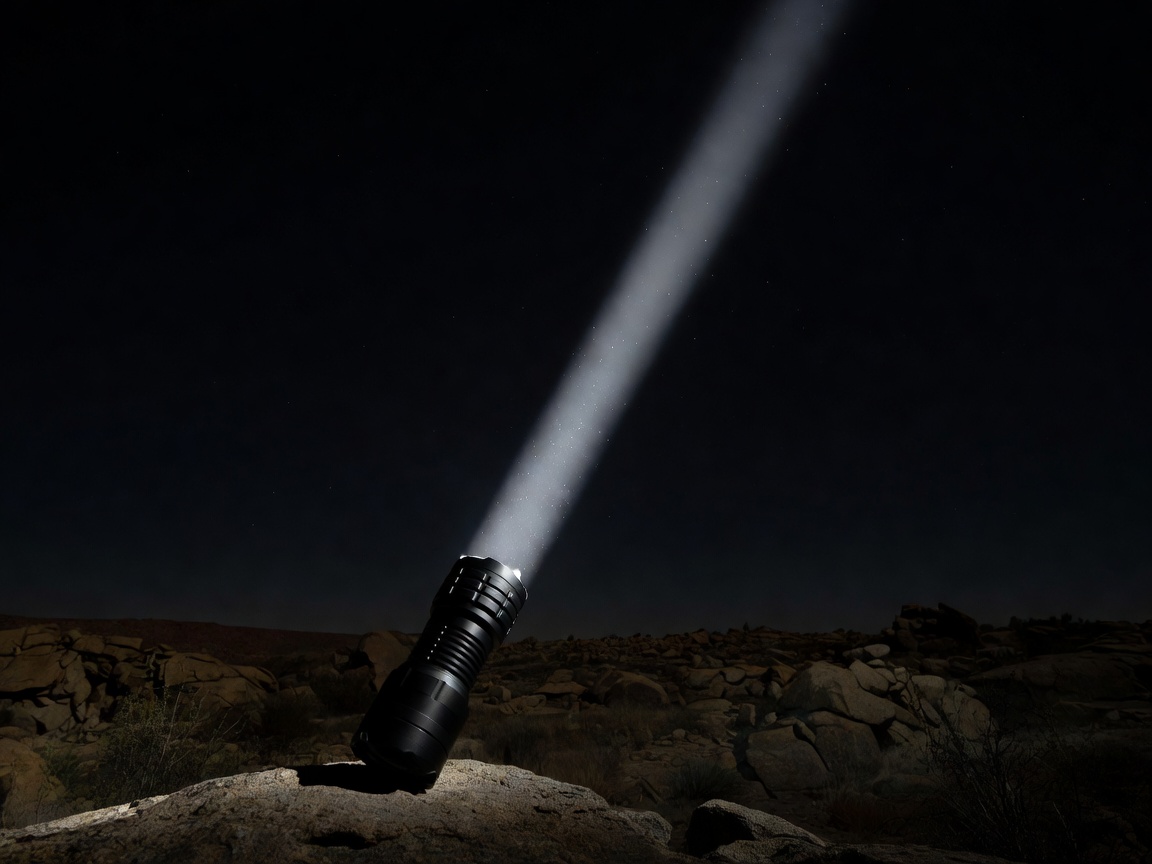
When you need to inspect property lines, perform search and rescue operations, or simply marvel at modern optical engineering, standard flashlights fall short. Enter the searchlight category—heavy, massive tools designed to do one thing: throw an extraordinary amount of light over vast distances.
The Physics of Throw
A beam's distance is determined by candela, not just lumens. Candela measures peak beam intensity. To generate massive candela, manufacturers use highly polished, deep, smooth reflectors. The larger the diameter of the reflector head, the more tightly the emitted light can be focused into a pencil-thin column.
Another breakthrough in searchlight technology is the LEP, or Laser Excited Phosphor. Unlike traditional LEDs, an LEP shines a blue laser diode onto a layer of phosphor to create white light, which is then focused through convex lenses. The result is a beam with almost zero spill—just a pure, unbroken lightsaber beam that can travel over a mile.
Battery Arrays and Sustained Output
Extreme output requires extreme power. Most high-end searchlights utilize battery packs containing three or four 18650 or 21700 lithium-ion cells arranged in parallel or series. This large energy reservoir serves two purposes: providing the immense current (Amperage) required for multi-thousand lumen bursts, and providing the capacity (mAh) to sustain use over long search operations.
Because they house such massive batteries, these lights are heavy. Many include shoulder straps or heavy-duty tripod mounts. Attempting to hold a 4-pound flashlight by a thin handle for an hour is physically exhausting.
Active Cooling Mechanisms
When pushing 20,000+ lumens, the emitters generate temperatures capable of melting internal solder joints within seconds. Passive cooling (machined aluminum cooling fins) is often insufficient for these beasts.
To combat thermal throttling, flagship searchlights increasingly feature active cooling elements. These include micro-fans built into the handle or head of the light that spin up when internal sensors detect high temperatures. Some advanced models even feature fluid heat pipes similar to those found in high-performance computer graphics cards. While this introduces moving parts to an otherwise solid-state device, it is the only way to sustain ultra-high lumen outputs for more than a few minutes.